Rest is part of the work: the case for psychological detachment.
chill bro. Why switching off properly is restoration.
A day off where you check email, rehearse Monday's meeting and feel vaguely guilty is barely a day off. Psychologists have a name for the real thing: psychological detachment from work.
What is psychological detachment?
It means mentally switching off from work in your time off. Being away from your desk is half of it. The other half is not thinking about the desk either (Sonnentag, 2012).
What switching off does
People who detach more in their time off are more satisfied with their lives and report fewer signs of strain. And they're no less engaged at work for it (Sonnentag, 2012).
So rest pays you back on the days you do work. It belongs in the plan.
Choose the day off
The trouble with most days off is that we drift into them. Nothing gets planned, nothing gets done, and the evening fills up with guilt. Try this instead:
- Decide in the morning. Focus day or day off, on purpose.
- Leave the list alone. It'll be there tomorrow.
- No guilt in the evening. A chosen rest day is a good day.
Offday
Every morning offday asks if today is a focus day. Not feeling it? Just leave it. The day becomes an offday and your streak stays safe. Take the day off. Keep the streak.
Download on theApp Store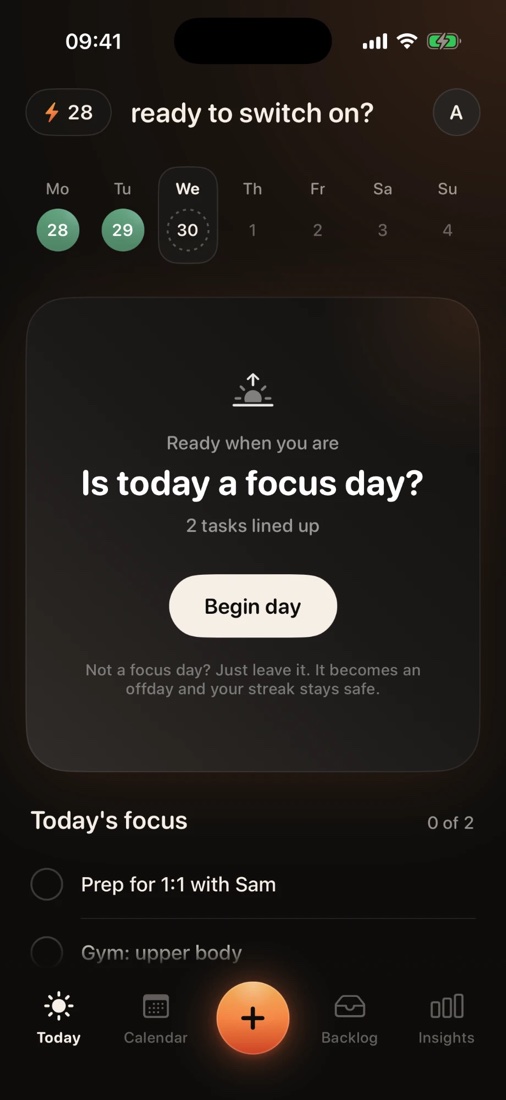
Sources
- Sonnentag, S. (2012). Psychological detachment from work during leisure time: The benefits of mentally disengaging from work. Current Directions in Psychological Science, 21(2), 114–118.
- Sonnentag, S., & Fritz, C. (2007). The Recovery Experience Questionnaire: Development and validation of a measure for assessing recuperation and unwinding from work. Journal of Occupational Health Psychology, 12(3), 204–221.