Why one missed day makes you quit a habit.
All it takes is one bad day. Here's how to make sure it doesn't.
Twelve days in a row. Then one miss, the counter resets to zero, and the whole habit quietly goes with it. If one missed day makes you quit, you're in good company, and the cause is more about the counter than about you.
What the research on broken streaks found
Across seven studies, people who saw a broken streak in their record were less likely to carry on than people who saw it intact (Silverman & Barasch, 2023).
Here's the interesting part. The effect depended on how the log showed the past, more than on what people had actually done. And it was stronger when people blamed themselves for the break.
The same week, two ways
Picture a week with six good days and one day off. Draw it as six ticks and a cross, and it reads as failure. Draw it as six ticks and a rest day, and it reads as a good week. Same behaviour, very different feeling about tomorrow.
How to keep a habit through a day off
- Decide rest on purpose. A chosen day off is part of the plan.
- Record it as rest. Give it its own mark, separate from a miss.
- Save the cross for real misses. A day you meant to do and didn't.
Why does a single slip feel so final? That's the what-the-hell effect, and it pairs with this one.
Offdays never break the streak
offday draws the line for you. A won day builds your streak. A day you choose to rest is an offday, and it's skipped: it doesn't add, and it doesn't break. Only a day you begin and don't finish breaks the streak. Keep the streak. Take the day off.
Download on theApp Store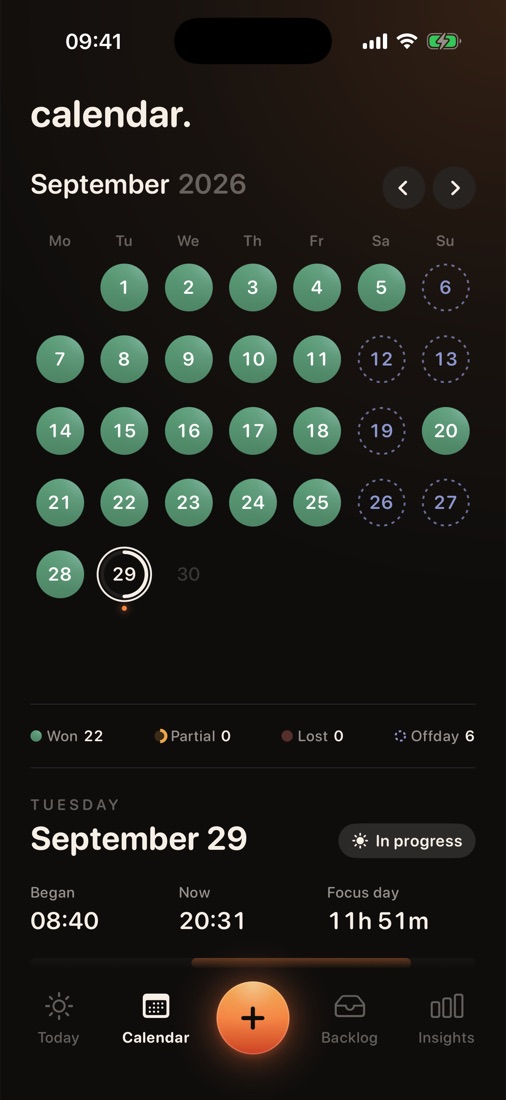
Sources
- Silverman, J., & Barasch, A. (2023). On or off track: How (broken) streaks affect consumer decisions. Journal of Consumer Research, 49(6), 1095–1117.